FAQs
Q: What is heart coherence and how can it help me?
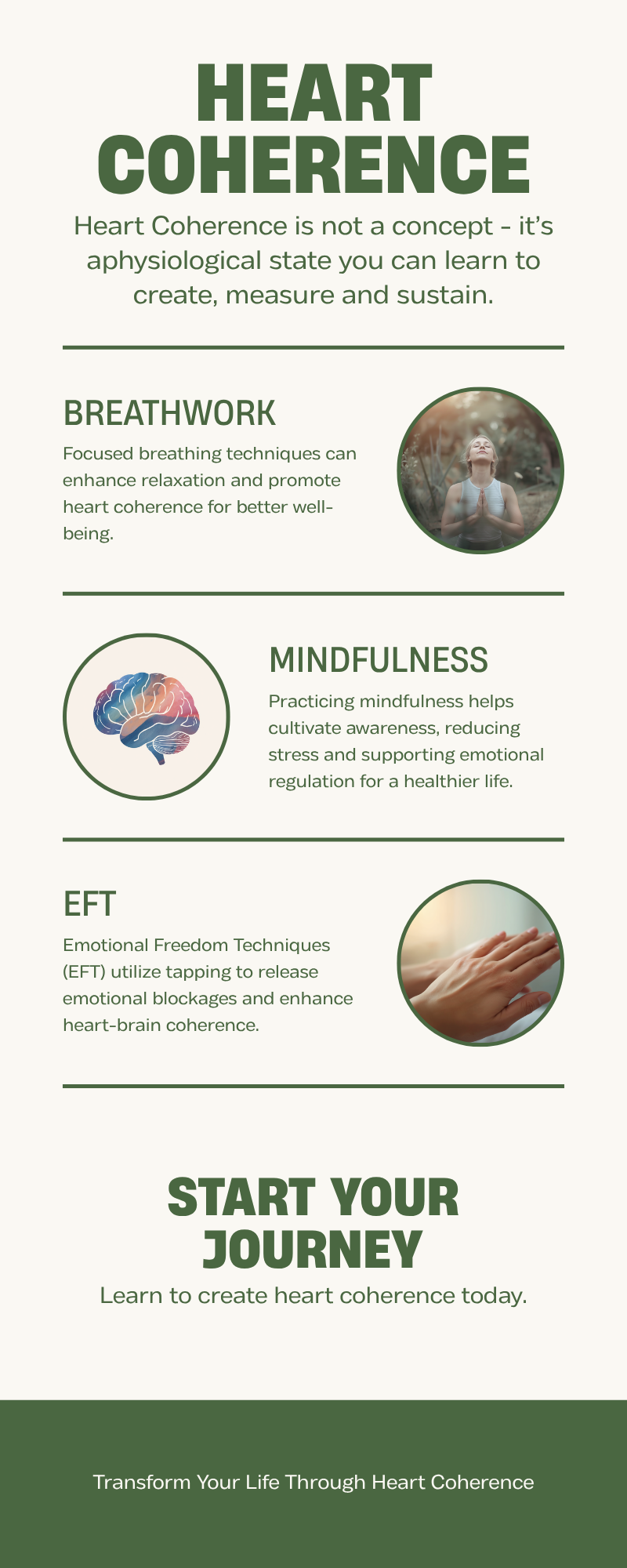
A: Heart coherence is a measurable physiological state in which your heart, brain and nervous system synchronise through slow, rhythmic breathing and positive emotional focus. Research shows it can reduce stress hormones, improve emotional regulation, enhance focus and support overall wellbeing in minutes, not months.
Q: Who are these sessions designed for?
A: Sessions are open to anyone experiencing stress, overwhelm or disconnection - teachers, healthcare workers, business professionals, community members, or anyone simply looking to feel more regulated and at ease. Workplace programs are tailored for schools, healthcare teams, businesses and community organisations.
Q: Do I need any prior experience with breathwork or meditation?
A: Not at all. Every session is designed to be accessible regardless of your background or experience. You simply arrive as you are - no special knowledge, equipment or preparation needed.
Q: What actually happens in a session? A: Sessions draw on a combination of heart coherence breathing, mindfulness, EFT (Emotional Freedom Techniques) tapping and reflective conversation - shaped around what you need on the day. No two sessions are identical because no two people are in the same place.
Q: What is EFT tapping and is it evidence-based?
A: EFT (Emotional Freedom Techniques) involves gently tapping on specific acupressure points while focusing on a thought, feeling or experience. It has a growing evidence base for reducing cortisol (the stress hormone), anxiety and emotional distress. Professor Peta Stapleton at Bond University is one of the world's leading EFT researchers and is also a supervisor of the PhD research underpinning this work.
Q: How is this different from regular counselling or therapy?
A: These sessions are not therapy or counselling. They are practical, skills-based wellbeing sessions focused on nervous system regulation and self-care tools you can use every day. If you are experiencing significant mental health challenges, I will always encourage you to seek appropriate professional support alongside these practices.
Q: Do these practices really make a measurable difference?
A: Yes - and the evidence is growing. Research shows that heart coherence, breathwork, mindfulness and EFT tapping can reduce perceived stress, lower cortisol levels, improve HRV (heart rate variability), and support emotional and cognitive regulation. My PhD research is currently measuring these effects with HRV data before and after each session.
Q: Can these practices fit into a busy schedule?
A: Absolutely. Even 5 -10 minutes of heart coherence breathing can measurably shift your nervous system state. Sessions are designed to give you simple, practical tools you can use before a difficult meeting, during a break, or as a daily reset - not practices that require an hour of quiet time you don't have.
Q: What does a workplace program look like?
A: Every workplace engagement begins with a conversation about your organisation's specific context, pressures and goals. From there, programs can include staff workshops, regular group sessions, professional learning days, and take-home resources delivered online, in-person, or as a mix of both. Book a free 30-minute enquiry call to explore what might suit your team.
Q: How do I get started?
A: The simplest first step is a complimentary 30-minute wellbeing session. It's an opportunity to experience the approach, discuss what you're looking for, and decide whether further sessions would be valuable with no obligation either way.
Q: Where are sessions held?
A: Sessions are available online via Zoom or in-person on the Gold Coast, Queensland. Workplace programs can be delivered at your organisation's premises anywhere in South East Queensland, or online nationally.
Q: What if I have more questions?
A: Please reach out directly — I'm happy to have a conversation before you book anything.
📞 0432 588 347 ✉️ steve@theheartoflearning.com.au